
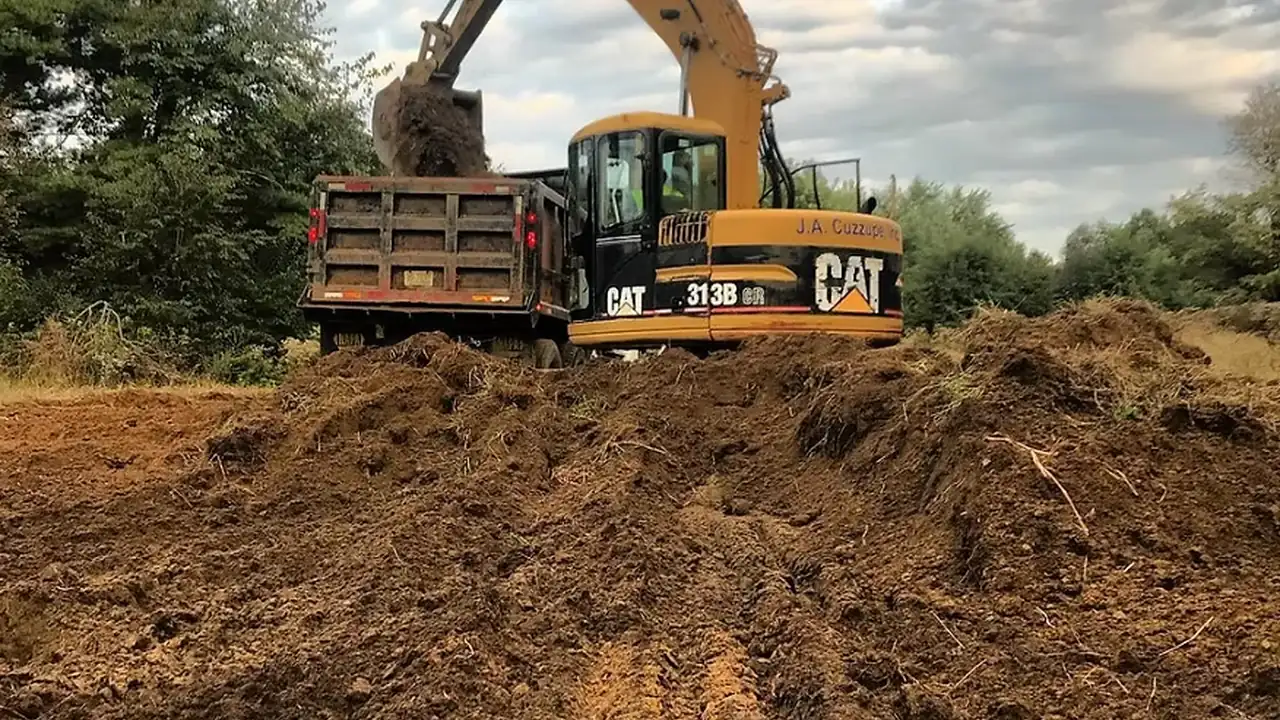
Land Grading & Site Preparation
Family-owned since 1979Licensed & insuredFree written estimates
Family-owned in Cherry Hill since 1979
“Easy, clean, professional experience from start to finish. Highly recommend!”
Erik R., Google review “Very friendly and professional.”
Terri H., Google review
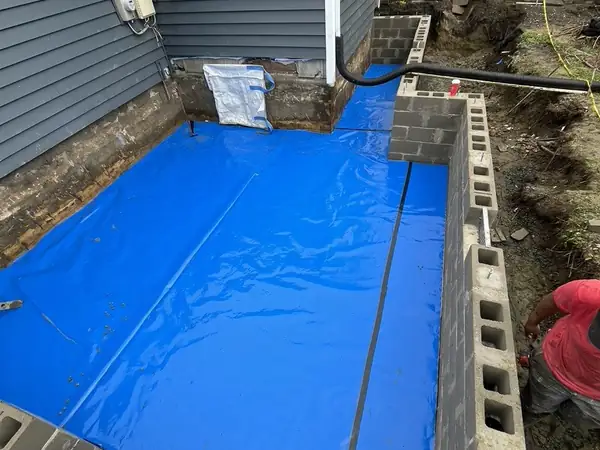
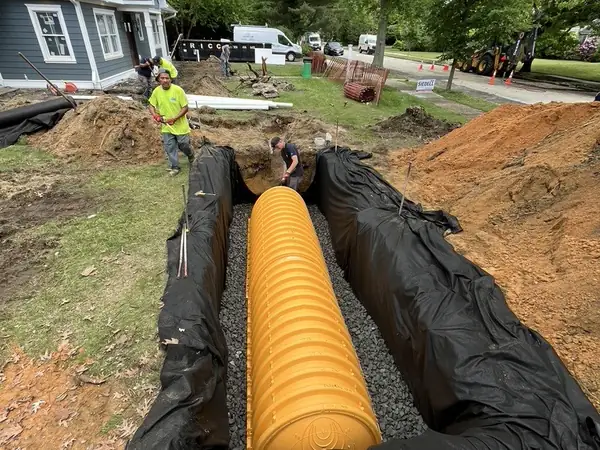
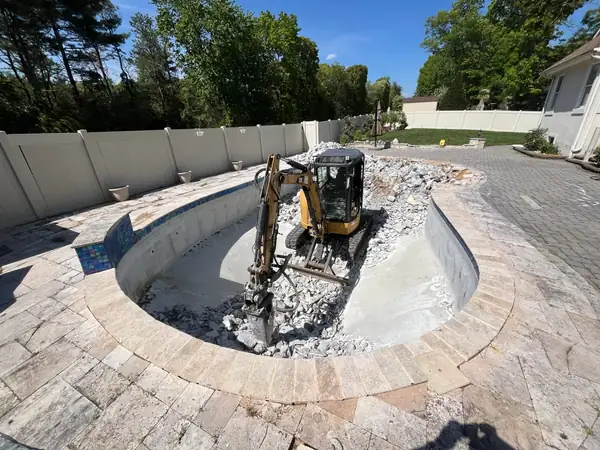
Land grading is reshaping the ground to planned elevations so a site drains away from buildings and gives foundations, driveways and lawns a stable, level base. Site preparation is everything that readies a lot for construction: clearing, stripping topsoil, cut and fill, building pads and utility trenches.
When you need it — and when you don't.
When you need this
- You are building a new home, addition, garage or outbuilding and the lot needs to be cleared, cut and filled to the elevations on the plans before the foundation is dug.
- Water runs toward the house, pools against the foundation or sits in the yard for days after rain because the ground slopes the wrong way.
- A builder, engineer or township approval requires a lot to be graded to an approved grading plan before a certificate of occupancy.
- You need a level, compacted pad for a driveway, patio, shed, pool or parking area.
- A demolition or pool removal has left an area that needs to be brought back to a usable, properly sloped grade.
When this is the wrong fix
- If water problems come from a downspout discharging next to the house, extending the downspout or adding a drain line may solve it without regrading the whole yard.
- If the yard is flat and there is nowhere lower to send the water, regrading alone cannot fix it; a French drain, dry well or sump may be needed with it.
- Adding topsoil over the old grade without reshaping it rarely fixes drainage and can raise soil against siding or above the foundation.
How it's done.
We start from the plans or, for a yard, from where the water needs to go. The site is cleared and the topsoil stripped and stockpiled. Cuts and fills are made with our own equipment, and fill is placed and compacted in lifts so it does not settle later. Elevations are checked with a laser level as we work, building pads are compacted to support what will sit on them, and the ground is shaped to move surface water away from structures toward a swale, drain or other legal outlet. Utility trenches are cut at this stage when the project calls for them. Final grading brings back the topsoil and leaves the surface ready for seed, sod, concrete or paving.
Materials & standards
| Item | Typical practice |
|---|---|
| Grade away from structures | Positive slope away from the foundation, generally around 6 inches of fall over the first 10 feet where the lot allows |
| Open lawn slope | Roughly 1% or more across turf so water does not sit |
| Fill placement | Placed and compacted in lifts rather than dumped in one pass |
| Elevation control | Laser level checks against plan elevations or the planned drainage path |
| Topsoil | Stripped and stockpiled before cut and fill, then respread for final grade |
How the job runs.
- 01
Walk the site, review any plans or grading requirements, and mark out utilities.
- 02
Clear the area and strip and stockpile the topsoil.
- 03
Cut high areas and fill low areas, compacting fill in lifts.
- 04
Build and compact any building, driveway or patio pads to the planned elevation.
- 05
Rough grade the site to move water away from structures toward a legal outlet, cutting utility trenches where the project calls for them.
- 06
Fine grade, respread topsoil and leave the surface ready for seed, sod, concrete or paving.
What moves the number.
Every site is priced individually after we have walked it, in writing, with the scope itemized. These are the variables that decide where a job lands.
| Factor | Effect on price |
|---|---|
| Area and amount of cut and fill | More ground to move, or soil that has to be brought in or hauled away, adds equipment time and material. |
| Soil conditions | Wet or soft ground may need to be dried, undercut or replaced with better fill before it will compact. |
| Access | Tight lots and narrow side yards need smaller machines and take longer than open sites. |
| Drainage work | Swales, drains or dry wells added to carry water away add to the scope beyond reshaping the ground. |
| Restoration | Topsoil, seed or sod and any replaced walks or edging add to the finished cost. |
Questions we get, answered.
If you are in Camden, Burlington or Gloucester County, yes. We are a land grading contractor based in Cherry Hill, NJ, and we grade new construction sites and residential yards across South Jersey. Call (856) 488-2227 for a free estimate.
Rough grading moves the bulk of the soil to get the site close to its planned elevations and drainage. Fine grading is the final shaping and smoothing before topsoil, seed, concrete or paving.
Yes. We clear and strip the lot, cut and fill, build and compact pads, trench for utilities and leave the site ready for the foundation and the next trades.
Often it is the first fix. Shaping the ground so water runs away from the house solves many wet-yard and wet-basement problems, and where the lot is flat we add a French drain or dry well to give the water somewhere to go.
Both. Most of our grading is for homeowners and builders, and we also grade commercial pads and lots.
Where we do this work.
- Cherry Hill, NJ
- Collingswood, NJ
- Haddonfield, NJ
- Marlton, NJ
- Medford, NJ
- Moorestown, NJ
- Mount Laurel, NJ
- Mullica Hill, NJ
- Voorhees, NJ
- Washington Township / Sewell, NJ
- Berlin, NJ
- Camden, NJ
- Gloucester Township, NJ
- Haddon Township, NJ
- Maple Shade, NJ
- Pennsauken, NJ
- Sicklerville, NJ
- Merchantville, NJ
- All Service Areas ↗