Home/Services / Demolition
Residential Demolition in South Jersey.
We take down garages, sheds, decks, additions, pools, driveways and old foundations across Cherry Hill and South Jersey — permits, utility disconnects, hauling and disposal, then backfill and grading so the ground is ready for whatever comes next. One crew, one written estimate.
What we demolish Most residential structures.
Most of our demolition work is residential: the structures that sit on an ordinary South Jersey lot and have reached the end of their useful life. A detached garage with a failing roof, a shed nobody uses, a rotted deck, an addition that is being replaced, an inground pool, a cracked driveway or patio, or the footings and slab left behind after something else was removed.
Because we are an excavation and concrete contractor as well, demolition is rarely the whole job for us. We take the structure down, remove what is underneath it, and leave the ground in a condition you can actually use — whether that means new lawn, a new slab, or a new building.
- Detached garages and carports
- Sheds and outbuildings
- Decks, porches and stairs
- Additions and sunrooms
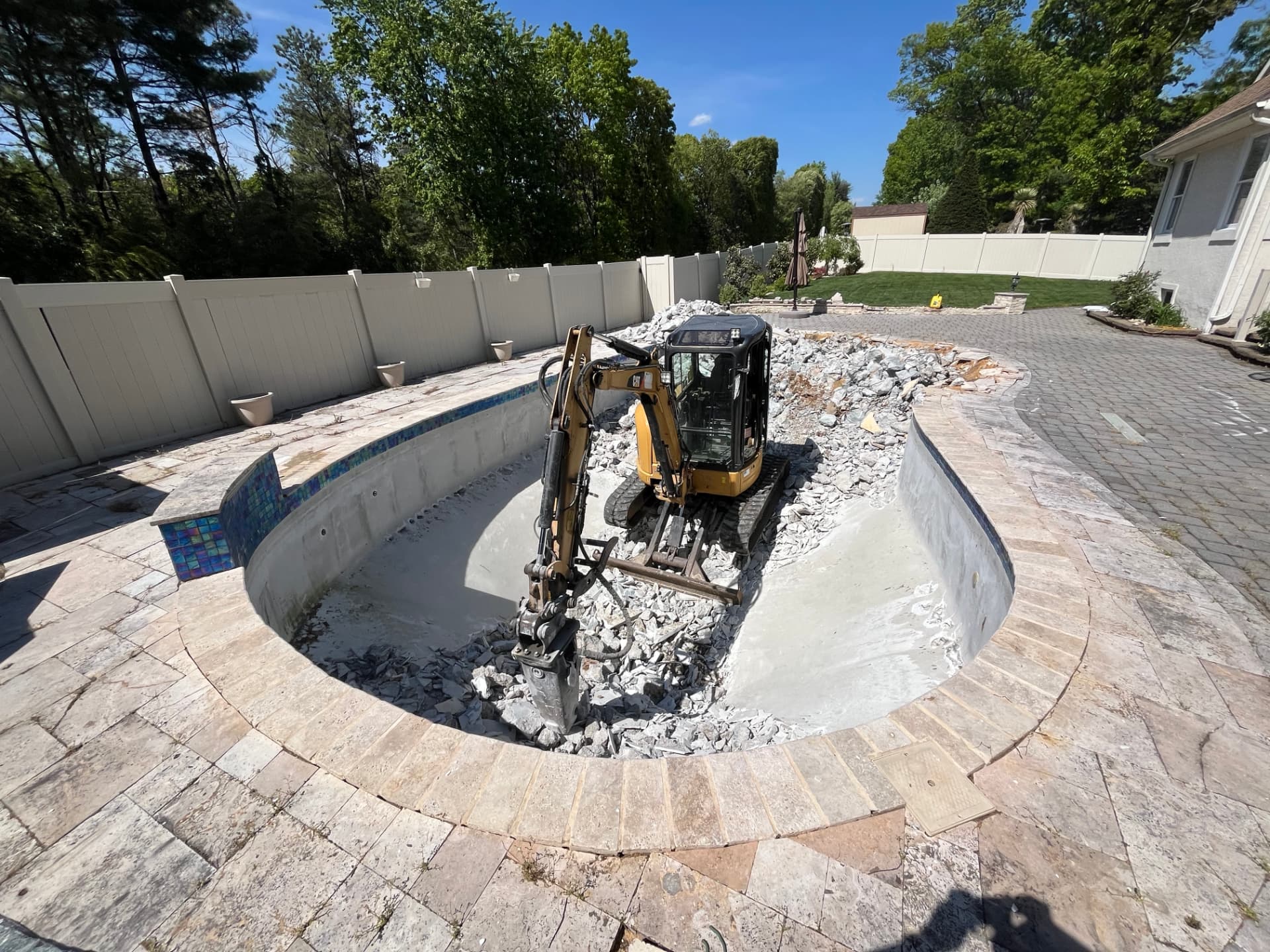
- Inground pools (full removal or fill-in)
- Concrete driveways, patios and walks
- Foundations, footings and slabs
- Retaining walls and masonry
Selective and interior demolition When part of it stays.
Not every project means taking a whole structure down. Sometimes you need an addition removed while the house stays, a section of concrete cut out and replaced, a slab broken out for new plumbing, or a basement floor opened for a sewer repair. That is selective demolition, and it is done more carefully: we saw-cut clean edges, protect the parts that remain, and control dust and debris.
Where interior demolition is part of a bigger project — for example opening a basement slab to reach a failed sewer line — we coordinate it with the rest of the work so there is one schedule. When the work could affect the structure of the part that stays, the town may require drawings from an engineer or architect first; we tell you up front if that applies.
Permits and paperwork Handled by us.
Most demolition in New Jersey needs a permit from the local construction office, and towns typically want to see that utilities have been properly disconnected before they issue it. Some towns have their own additional requirements, and work near the street or sidewalk can need separate approval. The rules are set locally, so they differ from one municipality to the next.
We file the demolition permit application, gather the documents the town asks for, and schedule any inspections. We also call in utility mark-outs before any digging, as New Jersey law requires. You get a closed-out permit at the end, which matters if you sell the property later.
Utility disconnects Before anything comes down.
A structure cannot be safely demolished while it still has live gas, electric or water service, and a sewer connection has to be properly capped so debris and groundwater do not get into the line. Garages and additions often have a buried electric feed, and pools usually have electric and plumbing runs back to the house.
Some disconnects are performed by the utility company and some by licensed trades. We identify which services the structure has, tell you who needs to do what, coordinate the order, and wait until everything is confirmed disconnected before work starts. If a line needs to be rerouted to keep serving the house, we plan that in advance.
Demolition, hauling and disposal A clean site.
We use equipment sized to the job and the lot — compact machines on tight suburban yards, larger equipment where there is room. We protect what stays: driveways, fences, trees, neighboring property and your house. Debris is loaded as we go rather than left in piles.
Concrete, masonry, metal, wood and general debris are hauled off site and taken to appropriate disposal or recycling facilities. Hauling is included in the scope, so there is no separate dumpster rental to arrange, and the site is cleaned up at the end of each day.
Backfill and grading Ground you can use.
Taking a structure down usually leaves something behind: footings, a slab, a crawl space, a basement or a pool cavity. We remove what needs removing, then backfill with suitable material placed and compacted in layers. Compacting in layers matters — fill that is just dumped in settles later and leaves a soft, sunken spot in the yard.
We finish by grading the area so water runs away from the house and off the lot the way it should. From there you can topsoil and seed, or we can prepare the ground for a new slab, driveway, patio or building. If you plan to build on the spot, tell us early so the backfill is done to suit.
Pools, driveways and foundations The heavy concrete jobs.
Concrete demolition is where most of the effort goes. An inground pool can be removed completely or broken down and filled in place; full removal costs more but leaves ground that is easier to build on later and simpler to disclose when you sell. We explain both options during the visit and our pool removal page covers them in detail.
Old driveways, patios and walks are broken out, loaded and hauled, and the base underneath is checked before anything new goes down. Foundations and slabs left behind after a garage or addition comes down are removed to the depth your next project needs, so you are not building on top of buried concrete that will cause trouble later.
Planning the job What to expect.
Every demolition starts with a free site visit. We look at the structure, how it was built, what utilities run to it, how equipment will reach it, and what you want the ground to be afterward. Then you get a written estimate that lists permits, disconnects, demolition, hauling, backfill, grading and restoration as separate parts of the scope.
Once you approve it, we file for permits and line up the disconnects. When those are in place we schedule the work, let you know which days the crew and equipment will be on site, and keep you informed until the final grade is done and the permit is closed. If something unexpected turns up underground, we stop and talk to you before going further.
What affects the cost No guesswork.
We do not publish demolition prices, because two jobs that sound alike can be very different once you see them. Instead, every job gets a free written estimate after we visit. These are the things that move the number:
- Size and type of structure
- How it was built (wood, block, concrete)
- Foundations or slabs to remove
- Equipment access to the yard
- Amount of debris to haul
- Utility disconnects required
- Backfill and grading needed
- Restoration of lawn, drive or walk
Why one contractor From demo to dirt.
When demolition, hauling, excavation and grading are split between different companies, there are gaps: one crew leaves, the next one is weeks away, and nobody is responsible for the hole in between. We self-perform the whole sequence with our own operators and equipment, so the work moves straight from demolition to backfill to grading.
J.A. Cuzzupe Inc. is family-owned and has worked in South Jersey since 1979. We are licensed and insured, we give written estimates, and we serve homeowners, builders and property managers throughout Camden, Burlington and Gloucester counties.
Tell us what's coming down.
Describe the structure and attach any details in the message. We’ll set up a site visit and send a written estimate covering permits, demolition, hauling, backfill and grading.
- Family-Owned Since 1979
- Licensed & Insured
- NJLICA Member
- Free Written Estimates
- 24/7 Emergency Response
Demolition questions, answered.
In most towns, yes. Taking down a detached garage, a larger shed, a deck, an addition or an inground pool generally needs a demolition permit from the local construction office, and some smaller structures may be exempt depending on size and town rules. We check with the town for your property, file the application, and schedule any required inspections, so you are not guessing about what applies.
Utilities have to be safely shut off and disconnected before a structure comes down, and towns often require proof of that before they issue a demolition permit. Some disconnects are done by the utility company itself and some by licensed trades. We tell you which ones your project needs, coordinate the sequence, and do not start demolition until everything is confirmed off.
We load and haul it away. Concrete, masonry, wood, metal and general debris are separated where practical and taken to appropriate disposal or recycling facilities. You do not have to arrange a dumpster or deal with the hauling yourself, and the cost is spelled out in your written estimate.
No. After demolition we backfill any voids — old footings, basements, pools or crawl spaces — with suitable fill placed and compacted in layers, then grade the area so water drains away from your house. If you plan to build on the spot later, tell us, because that affects how the backfill should be done.
Selective demolition is possible when the scope is clear and the remaining structure is protected. For anything that affects the structure of the part that stays, an engineer or architect may need to be involved, and the town may require plans. We will tell you during the site visit whether your project needs that step before work can begin.
Once permits and utility disconnects are in place, many small residential demolitions — a shed, deck or detached garage — take a day or two of site work, while larger jobs such as foundations or pools take longer. The paperwork stage is often the longest part. We give you a realistic schedule in the estimate.
It depends on what is coming down, how it was built, access for equipment, how much debris has to be hauled, and how much backfill and grading is needed afterward. We do not quote unseen jobs. We visit the property and give you a free written estimate that lists each part of the work.