
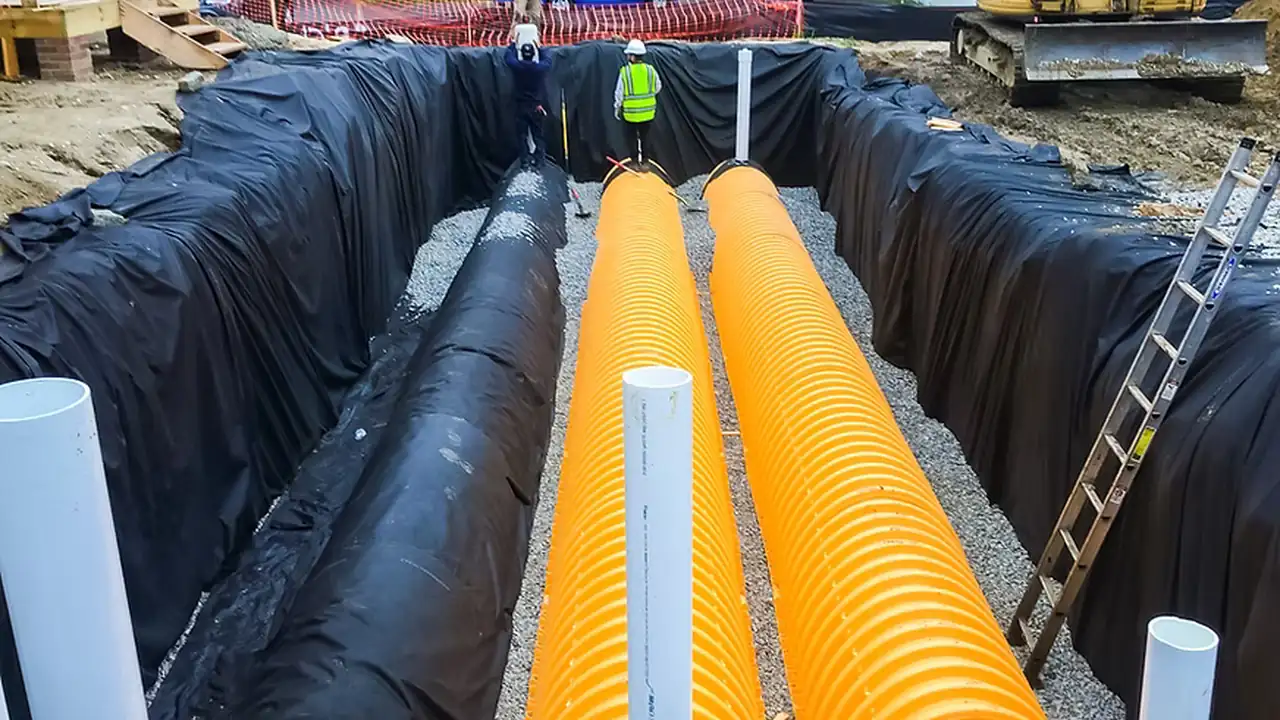
Interior French Drain Installation in South Jersey.
Dealing with water coming into your basement? We install interior French drains and sump systems that collect the water at the base of the walls and pump it out, for homes across Cherry Hill, Camden, Burlington and Gloucester counties.
Family-owned since 1979Licensed & insuredFree written estimates
Family-owned in Cherry Hill since 1979
“Easy, clean, professional experience from start to finish. Highly recommend!”
Erik R., Google review “Very friendly and professional.”
Terri H., Google review
Signs your basement may need interior drainage.
Not every wet basement needs the same fix. These are the patterns that usually point to water building up under and around the floor.
- 01
Water along the walls
Wet streaks or puddles at the base of the foundation walls after rain.
- 02
Water at the floor joint
Water showing up where the wall meets the floor, the most common entry point in a poured or block basement.
- 03
Flooding after heavy rain
The basement takes on water in big storms, even if it's dry the rest of the time.
- 04
Floors that stay damp
Damp patches, efflorescence (white residue) or a musty smell that keeps coming back.
- 05
Water near the foundation
Water seeping in through cracks, tie holes or pipe openings near the bottom of the wall.
- 06
A sump that can't keep up
An existing sump pit that fills fast, runs constantly, or has no drain line feeding it from the walls.
How an interior French drain works.
Most basement water comes from the soil around the house. When that soil is saturated, water pushes in where the wall meets the floor or up through the slab. An interior French drain gives that water a path before it reaches your floor.
A strip of the concrete floor is cut out along the inside of the foundation walls. A perforated pipe is laid in a bed of clean stone in that trench, pitched toward a sump basin. Water that comes in at the wall or under the slab drops into the stone, runs through the pipe to the sump, and the sump pump sends it out of the house through a discharge line. The trench is then closed with new concrete.
It's a dependable way to manage water that's already getting in, and it doesn't involve digging up the yard, the driveway or landscaping. It isn't the answer to every wet basement. Water from a bad grade or downspouts, a leaking pipe, or condensation needs a different fix, and we'll tell you if that's what we find. If the source is outside, our exterior basement waterproofing, footing drains or yard regrading may be the better fit.
Winter installation
Don't wait until spring to deal with basement water.
An interior French drain is installed inside the basement, so frozen ground doesn't stop the work the way it can stop outside digging. Outside pieces, like where the discharge line exits, depend on conditions at your house, and we check those on the visit.
Water that keeps coming in over the winter can soak drywall, carpet and anything stored on the floor. Getting an estimate now means you know your options before the spring rains.
From the first call to a dry floor.
- 01
Call or request an estimate
Tell us where the water shows up and how often. We'll set a time to come out.
- 02
Basement visit
We look at where the water is getting in, the walls and floor, any existing sump, and where water can be discharged outside.
- 03
Written estimate
You get a free written estimate laying out the drain layout, sump and discharge, and any other work we'd recommend.
- 04
Prep and protect
We clear a work path, cover what stays in the basement, and protect the floor and stairs we walk through.
- 05
Cut the floor and dig the trench
The slab is cut along the walls and the concrete and soil are removed and hauled away.
- 06
Pipe, stone and sump
Perforated pipe goes in on clean stone, pitched to a new or existing sump basin with a pump and a discharge line out of the house.
- 07
Close the floor and clean up
The trench is filled with new concrete and the work area is cleaned up.
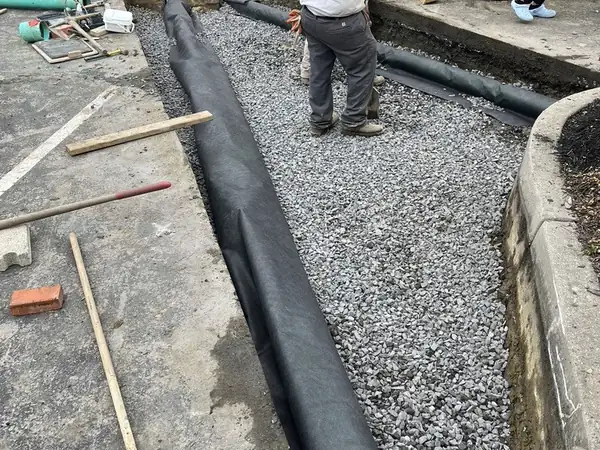
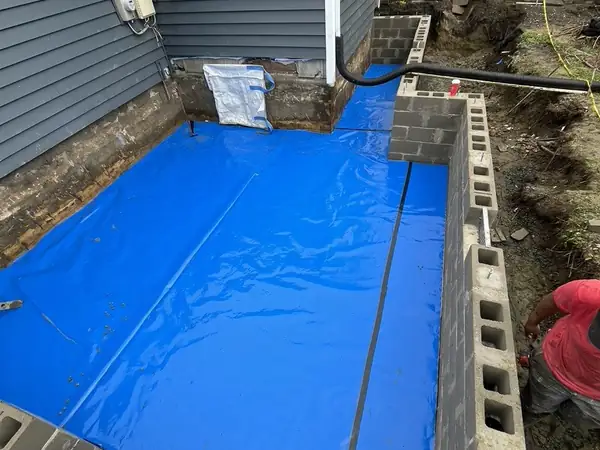
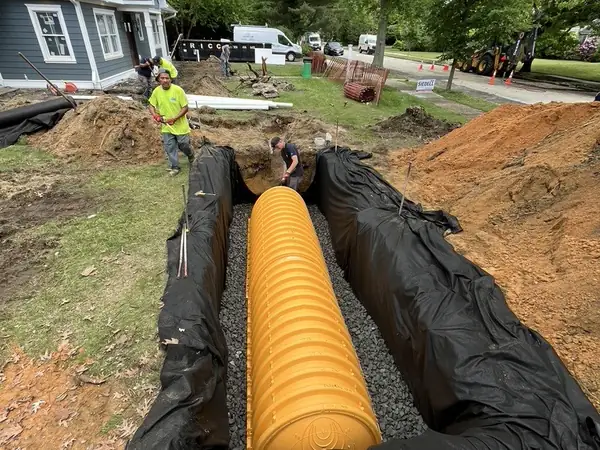
Drainage work by our crews.
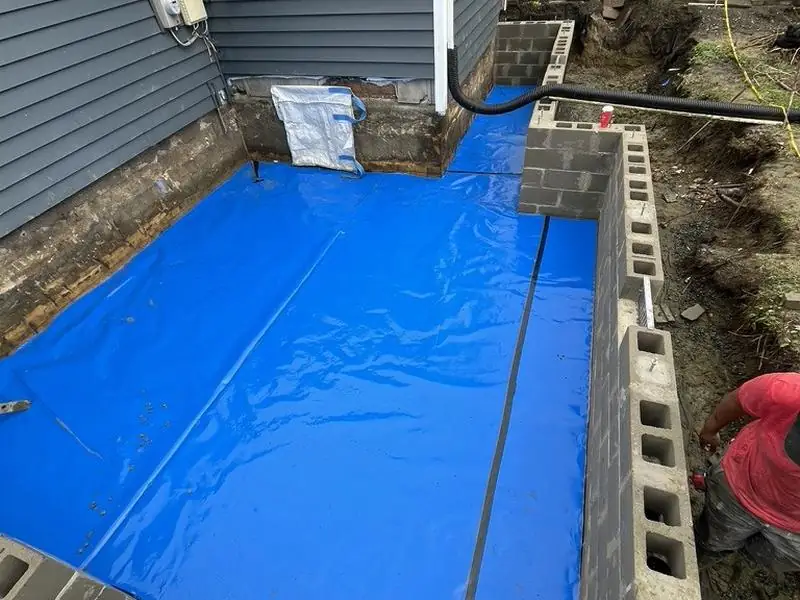
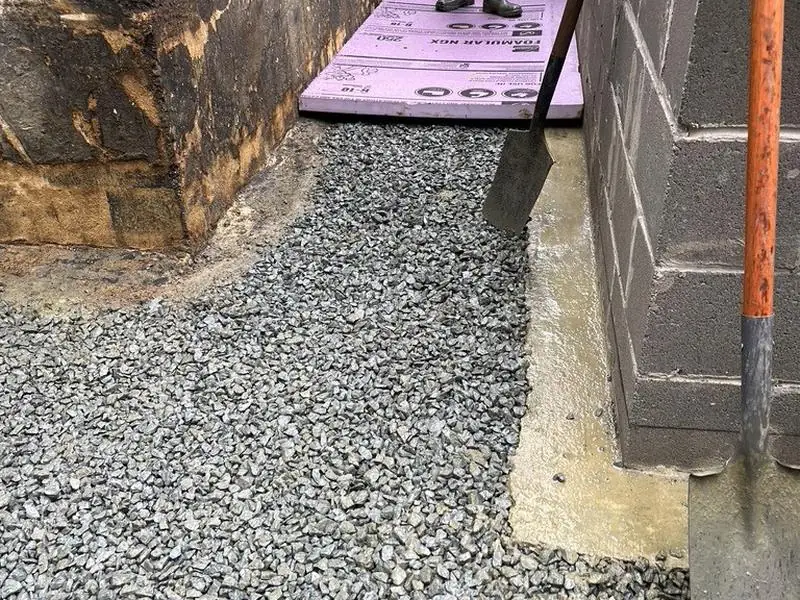
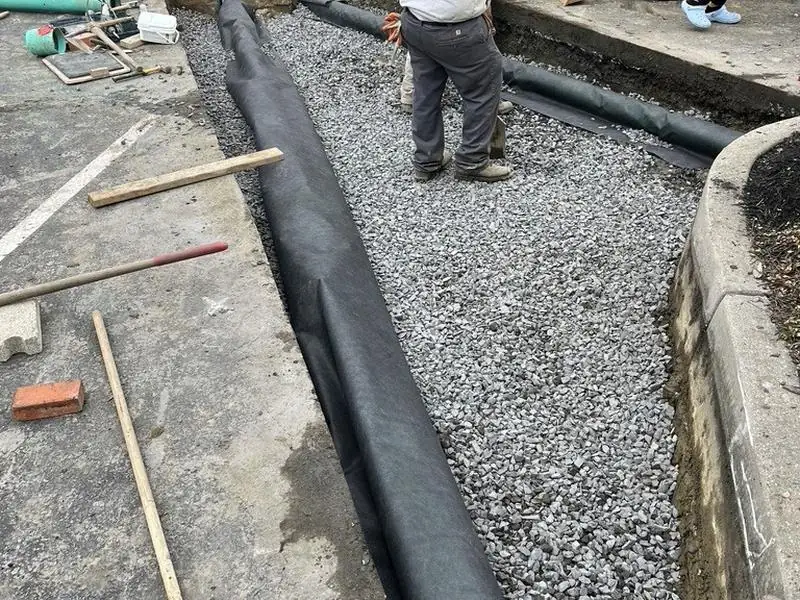
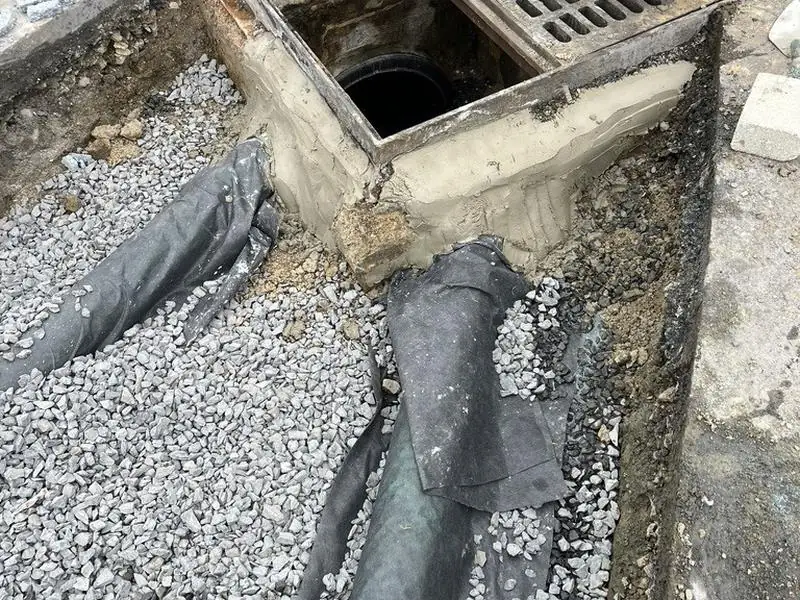
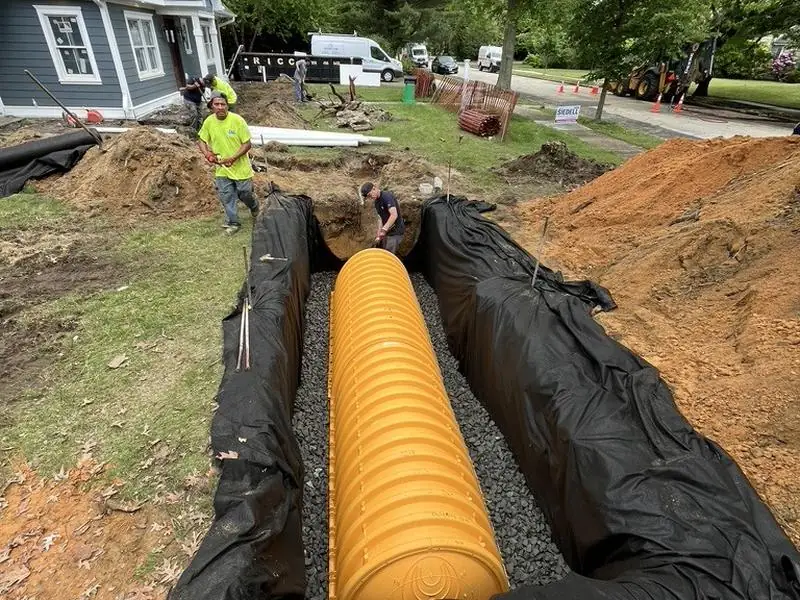
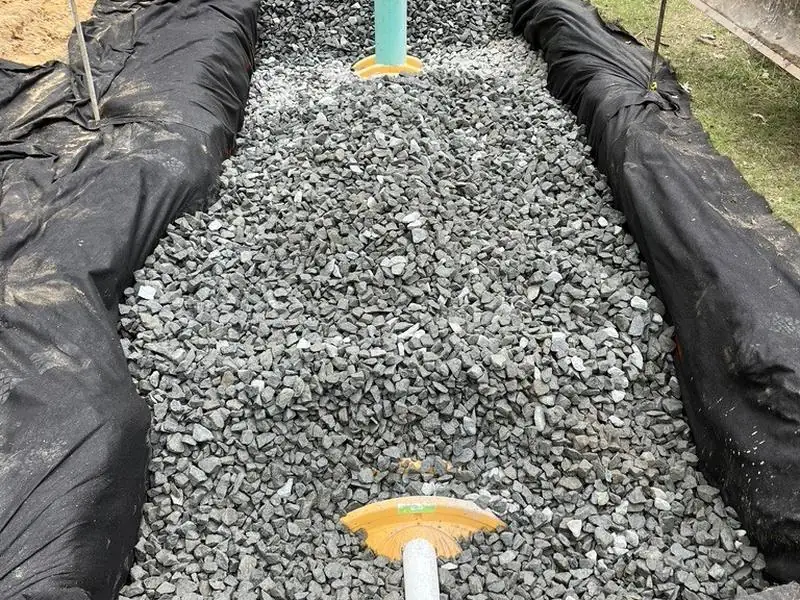
These photos are from recent foundation and site drainage jobs. We'll add interior drain projects here as this winter's jobs finish.
Common questions, honest answers.
It's a perforated pipe set in clean stone in a trench cut along the inside of the basement walls, under the floor. It collects water that comes in where the wall meets the floor or up through the slab and carries it to a sump pump, which pumps it out of the house.
It depends on how many feet of wall need the drain, how the floor is built, whether a sump basin and pump are needed, where the water can be discharged, and how much needs to be moved or protected. We give you a free written estimate after we see the basement.
Usually, yes. The work happens inside the basement, so frozen ground doesn't stop it the way it can stop outside digging. Outside pieces, like where the discharge line leaves the house, depend on conditions, and we check those when we visit.
It depends on the length of wall, the floor and access, and whether a new sump is going in. We give you a schedule with the estimate, so you know how long the crew will be in the basement.
In most South Jersey basements, yes. The drain collects the water, but it has to go somewhere, and a basement floor is usually below any place it could drain by gravity. We install the sump basin and pump, or tie into a working one you already have, and run a discharge line out of the house.
An exterior drain or waterproofing job is done from the outside: we dig along the foundation, seal the wall and set a drain at the footing, which stops water before it reaches the wall. An interior drain manages water that's already getting in, without digging up the yard. We do both, and we'll tell you which fits your house.
It's built to collect the water that comes in at the walls and under the floor and pump it out before it spreads across the basement. It won't fix every cause of water, like a leaking pipe, surface water from a bad grade, or a backed-up sewer line, so we look for those on the visit and tell you what we find.
Towns we serve.
Within about 30 miles of our Cherry Hill yard: Camden, Burlington and Gloucester counties.
- Berlin, NJ
- Camden, NJ
- Cherry Hill, NJ
- Collingswood, NJ
- Gloucester Township, NJ
- Haddon Township, NJ
- Haddonfield, NJ
- Maple Shade, NJ
- Marlton, NJ
- Medford, NJ
- Merchantville, NJ
- Moorestown, NJ
- Mount Laurel, NJ
- Mullica Hill, NJ
- Pennsauken, NJ
- Sicklerville, NJ
- Voorhees, NJ
- Washington Township / Sewell, NJ
The full list of towns we serve:
Camden County, NJ
Atco, Audubon, Barrington, Bellmawr, Berlin, Blackwood, Camden, Cedar Brook, Cherry Hill, Clementon, Collingswood, Gibbsboro, Glendora, Gloucester City, Haddon Heights, Haddonfield, Lawnside, Magnolia, Merchantville, Mount Ephraim, Oaklyn, Pennsauken, Runnemede, Sicklerville, Somerdale, Stratford, Voorhees, Waterford Works, West Berlin, Winslow
Burlington County, NJ
Beverly, Birmingham, Bordentown, Browns Mills, Burlington, Chesterfield, Columbus, Florence, Hainesport, Jobstown, Juliustown, Lumberton, Maple Shade, Marlton, Medford, Moorestown, Mount Holly, Mount Laurel, Palmyra, Pemberton, Rancocas, Riverside, Riverton, Roebling, Vincentown, Willingboro, Wrightstown
Gloucester County, NJ
Bridgeport, Clarksboro, Clayton, Ewan, Franklinville, Gibbstown, Glassboro, Grenloch, Harrisonville, Malaga, Mantua, Mickleton, Mount Royal, Mullica Hill, National Park, Newfield, Paulsboro, Pitman, Richwood, Sewell, Swedesboro, Thorofare, Wenonah, Westville, Williamstown, Woodbury, Woodbury Heights
Free written estimate
Get an estimate for your basement drainage project.
Family-owned in Cherry Hill since 1979. Tell us a little about the job and we'll get back to you, usually within 24 hours.