Excavation & Grading in Voorhees, NJ
Voorhees Township, Camden County. Family-owned, licensed and insured, and self-performing every stage of the work since 1979.
We handle excavation and grading across Voorhees Township, where much of the work is about water. Dense, slowly draining subsoil, almost no slope, and developments whose original grading plans were never quite achieved mean regrading and swale restoration are common. We also dig for additions, pools, patios and utilities, always backfilling in compacted lifts.
Free written estimates. Licensed and insured. Every site is quoted individually.
Free estimate in Voorhees, NJ
Grading is the core of Voorhees excavation
Most Voorhees homes date from the 1970s through the 1990s, with poured foundations and plastic laterals, so we dig for collapsed pipe less often than in older towns. What we're called for is the ground itself: lots that hold water, low points that collect from several neighbors, and swales that silted in and stopped working.
The fix is usually earthwork — cutting, filling and shaping the land so water has a path off the property.
Grading plans that were never finished
Planned developments were designed with swales and grades to move water between lots. Many were never built exactly as drawn, and cut-and-fill left low points. We survey how water actually moves, then regrade with instruments to restore a continuous fall to an outlet.
Restoring swales
In older communities, swales that once worked have filled in with silt, mulch and landscaping. Re-cutting a swale to grade, clearing its outlet and stabilizing its banks is often the most effective — and least disruptive — way to solve a neighborhood drainage problem. When a swale crosses several lots, we can coordinate with neighbors or the association.
Dense, slow-draining subsoil
Much of the township has dense subsoil that drains slowly. It holds a trench wall reasonably well but turns soft and sticky after rain, and excavated material often won't compact well as backfill. For structural work we frequently import suitable fill.
Sandier toward Kresson and Gibbsboro
Toward the Kresson and Gibbsboro edges, the ground gets sandier and drains better. Sand digs quickly but needs sloping or shoring on deeper trenches.
What else we excavate for
Beyond grading, Voorhees projects include:
- Footings for additions, sunrooms and garages
- Pool excavation, removal and backfill
- Base excavation for driveways and patios
- Utility trenching for sewer, water and drainage
- Removing buried debris and failed concrete
Additions and footings
We excavate footings to undisturbed bearing soil, remove soft fill rather than building on it, and have the excavation inspected before concrete. Backfill around the new foundation is compacted in lifts.
Townhome and condo communities
In townhome and condominium communities, excavation often involves common areas and shared utilities. We work with associations on scope and staging, locate every line, and keep residents' access open.
Utility trenching
We excavate for sewer and water repair, set new pipe to grade and backfill correctly. New Jersey American Water supplies water, and the Voorhees Township Sewer Department handles sewer.
Site prep for concrete
Driveways from the earlier developments are reaching the end of their life. New slabs start with excavation below soft soil and a compacted stone base.
Pool removal
Removing a pool means breaking out or removing the shell, filling the hole in compacted lifts with suitable material, and grading the area to drain.
Wet-weather digging
Depth to water is generally workable for utility trenching, but wet-weather digs need pumps. We plan for them so pipe and footings go into a firm, dry bottom.
Trench safety and permits
Deeper excavations are sloped, benched or shored for the soil and depth. Footings are inspected before concrete, and work in the right-of-way needs township approval.
Backfill in lifts
Every excavation is backfilled in compacted layers so the finished surface doesn't settle.
Surveying before regrading
Because so much Voorhees work is grading, we begin by checking elevations across the lot and its neighbors, finding where water enters and where it should leave. That survey tells us how much cut and fill is needed and whether an outlet exists at a low enough point. Without that step, regrading is guesswork.
Swales that stay working
A re-cut swale only helps if it keeps its shape. We stabilize banks with topsoil and seed or erosion fabric, keep the bottom at a continuous fall, and explain to owners what not to put in it — mulch beds, sheds and fences with solid bottoms are the usual reasons swales stop working again.
Talking with neighbors
Grading in a development rarely affects only one lot. We explain how water will move after the work and never redirect it onto someone else's property. When a shared swale is involved, we're glad to talk with neighbors or the association directly.
Cut-and-fill lots
Where developments were built by cutting high ground and filling low ground, one side of a lot can be firm native soil while the other is decades-old fill. Footings and slabs have to bear on the firm material, so on these lots we expect to dig deeper on the fill side and remove soft material until we reach soil that will carry the load.
Emergency sewer work
When a sewer line fails, our crews respond around the clock.
Sewage backing up right now? Call (856) 488-2227 — 24/7 emergency service.
Emergency sewer repair in Voorhees ↗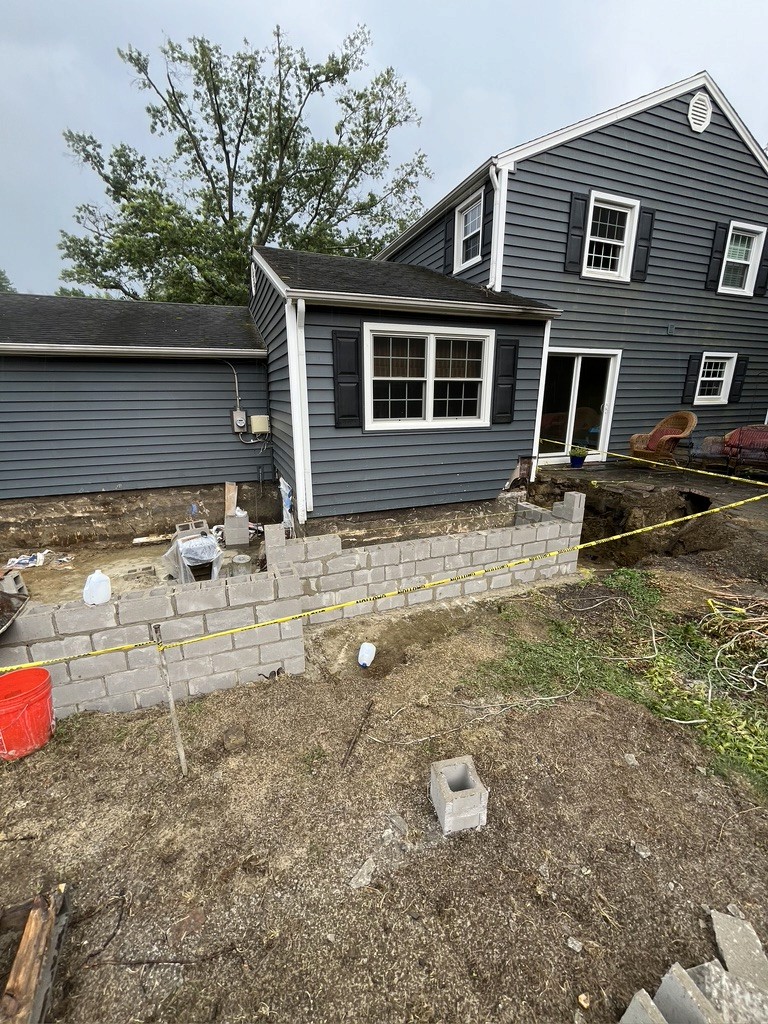
Voorhees questions, answered.
Often. Restoring the original swale or regrading to a continuous fall to an outlet usually solves it.
Yes. We coordinate scope and staging for common areas and shared utilities.
Suitable soil can be used for grading. Dense subsoil often isn't good structural backfill, so we import proper fill where needed.
Yes, to undisturbed bearing soil, inspected before concrete.
Other services in Voorhees.
Excavation & Grading — Voorhees, NJ