Inground Pool Removal in Cherry Hill, NJ
Cherry Hill Township, Camden County. Family-owned, licensed and insured, and self-performing every stage of the work since 1979.
{{ NEEDS REAL DATA: typical price band for inground pool removal in Cherry Hill }} covers inground pool removal in Cherry Hill, NJ. J.A. Cuzzupe Inc. has been based in the township since 1979. We demolish the shell, haul the concrete and steel off site, backfill in compacted lifts and finish to grade, so the yard is usable ground again rather than a soft depression.
Free written estimates. Licensed and insured. Every site is quoted individually.
Free estimate in Cherry Hill, NJ
Why this comes up in Cherry Hill.
Cherry Hill's pool population is concentrated in the neighborhoods that filled in between the late 1960s and the early 1980s — Barclay Farm, Kingston Estates, Woodcrest and the streets off Kresson and Springdale. Those gunite and steel-wall pools are now forty to fifty-five years old, well past the point where a new liner, coping or plumbing run is worth the spend. What usually starts the conversation is a second-generation owner who inherited a pool nobody swims in, an insurance renewal that asked about fencing, or a listing agent pointing out that a dated pool narrows the buyer pool on a quarter-acre lot. Because the township is flat and the water table in the lower western sections sits close to the surface, an abandoned pool that stops being pumped becomes a standing basin, which is the version of this call that arrives with urgency attached.
Housing stock
Cherry Hill filled in fast between the mid-1950s and the early 1970s, and most of what we work on reflects that. Split-levels, ranches and colonials on quarter- to half-acre lots, built with clay or early cast-iron sewer laterals running thirty to eighty feet out to the street main. Those laterals are now well past their service life: joints separate, roots find the gap, and the first sign is usually a slow basement drain rather than a dramatic backup. Driveways from the same era were poured thin, straight onto native soil with little or no stone base, and after fifty freeze-thaw cycles they spall at the apron and break up along the garage slab. Additions and finished basements added later often sit on fill that was never properly compacted, which shows up as settlement cracking years afterward.
Ground conditions
The township sits on the coastal plain, which here means sandy loam over pockets of dense clay, with the water table close enough to the surface in the low-lying western and southern sections that a deep trench can start weeping before you reach grade. Ground is generally flat, so nothing sheds on its own — water leaves a Cherry Hill lot only if somebody built a path for it. Cooper River and the Pennsauken Creek tributaries collect the runoff, and neighborhoods on the way to them hold water long after a storm. Practically, that means we shore deeper excavations, plan for dewatering on sewer work below about eight feet, and design drainage around a legal outlet rather than assuming the soil will absorb what we send it.
How the job runs in Cherry Hill.
- 01
Walk the site and measure access — gate widths, side-yard clearance, overhead wires and which neighbor's driveway a truck will sit in front of.
- 02
File the demolition permit with Cherry Hill Township and schedule the utility disconnects for pool power, gas heater and any dedicated water feed.
- 03
Drain the pool to a permitted discharge point and pull the equipment pad, plumbing and remaining water.
- 04
Break out the shell with hydraulic equipment — full removal takes the walls and floor out entirely; partial fill-in breaks the walls down and perforates the floor for drainage.
- 05
Load and haul concrete, steel and liner debris to a licensed disposal facility.
- 06
Backfill in compacted lifts with clean structural fill, testing compaction as we go rather than dumping and hoping.
- 07
Final grade to shed water away from the house, then topsoil and seed the disturbed area.
What inground pool removal costs in Cherry Hill.
{{ NEEDS REAL DATA: typical price band for inground pool removal in Cherry Hill }}
That is a typical range, not a quote. Every site is different and every job is priced individually after we have walked it — in writing, with the scope itemized.
What moves the number in Cherry Hill
| Factor | Effect on price |
|---|---|
| Full removal vs. partial fill-in | Full removal hauls the entire shell off site and costs more; partial fill-in leaves broken material in place and is cheaper but must be disclosed at resale. |
| Machine access on a quarter-acre lot | Cherry Hill's standard side yards are tight. If the excavator has to come in through a fence line or over a driveway apron, add mobilization, protection and restoration. |
| Pool construction | Gunite shells with thick bond beams break slower than steel-wall vinyl pools and generate more tonnage to haul. |
| Import fill volume | A deep-end pool needs a lot of clean fill trucked in. Depth and volume move the number more than surface area does. |
| Concrete decking and hardscape | Surrounding patio slab, coping and retaining walls are separate tonnage. Removing all of it costs more than removing the pool alone. |
| Restoration scope | Grade-and-seed is the baseline. Sod, irrigation repair or preparing the pad for a future addition are add-ons. |
Permits in Cherry Hill Township.
We file the permits and schedule the inspections ourselves — it isn’t left on your plate.
Cherry Hill Township requires a demolition permit for inground pool removal, with electrical disconnect handled under the same closeout. We file it and schedule the inspections ourselves. {{ NEEDS REAL DATA: Cherry Hill Township permit fee and application requirements for pool demolition and backfill }}
- Office
- Cherry Hill Township Department of Community Development — Construction Office
- Phone
- {{ NEEDS REAL DATA: Cherry Hill Township construction/permit office direct phone number }}
- Website
- {{ NEEDS REAL DATA: Cherry Hill Township construction/permit office web page URL }}
Recent projects near Cherry Hill.
- Cherry Hill, NJ
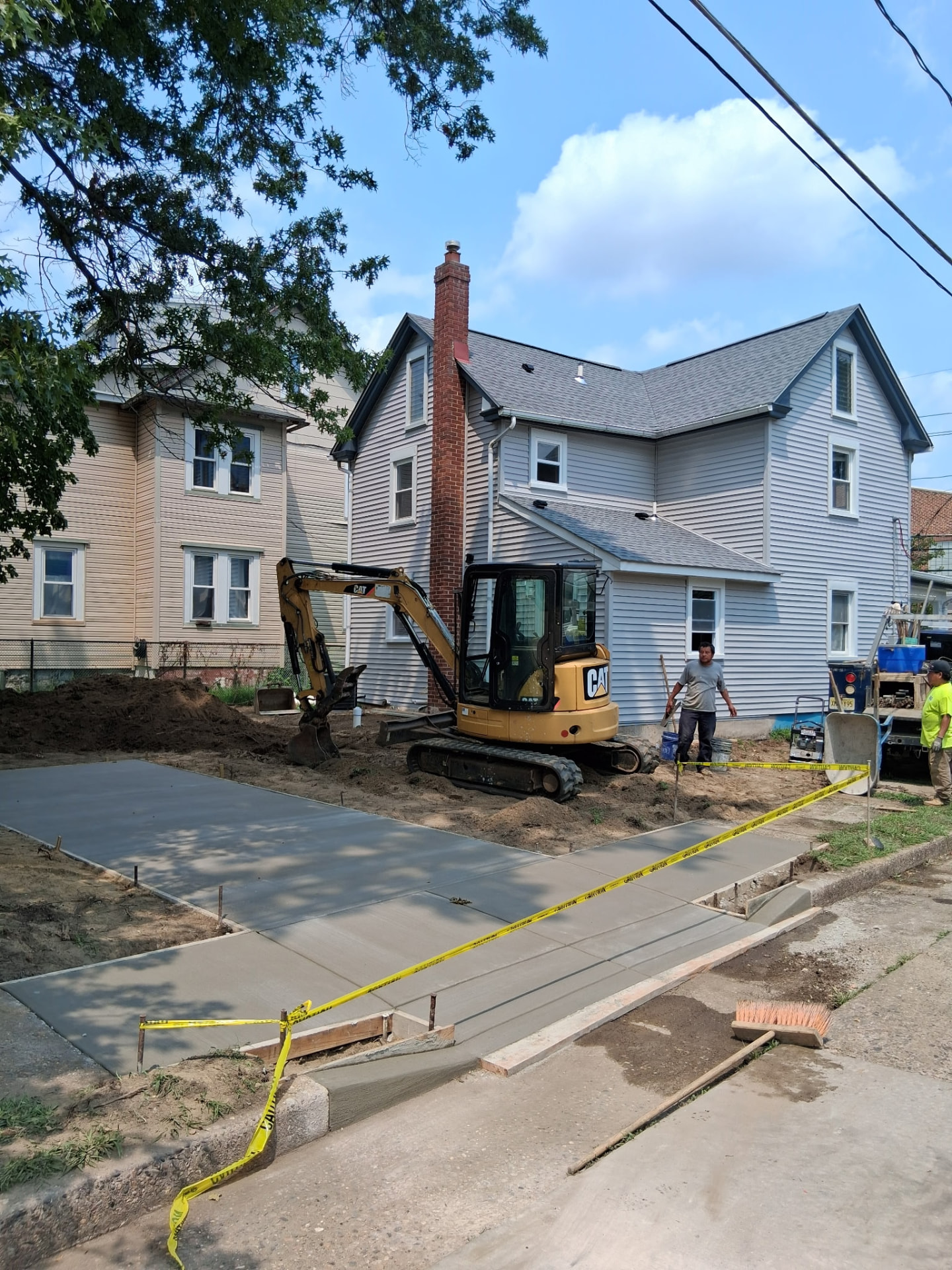
Chapel Ave Concrete Driveway
Full driveway replacement — old surface removed and hauled off, subgrade excavated and compacted, then formed, poured, and finished with a new apron and sidewalk section tied into the street.
- Cherry Hill, NJ
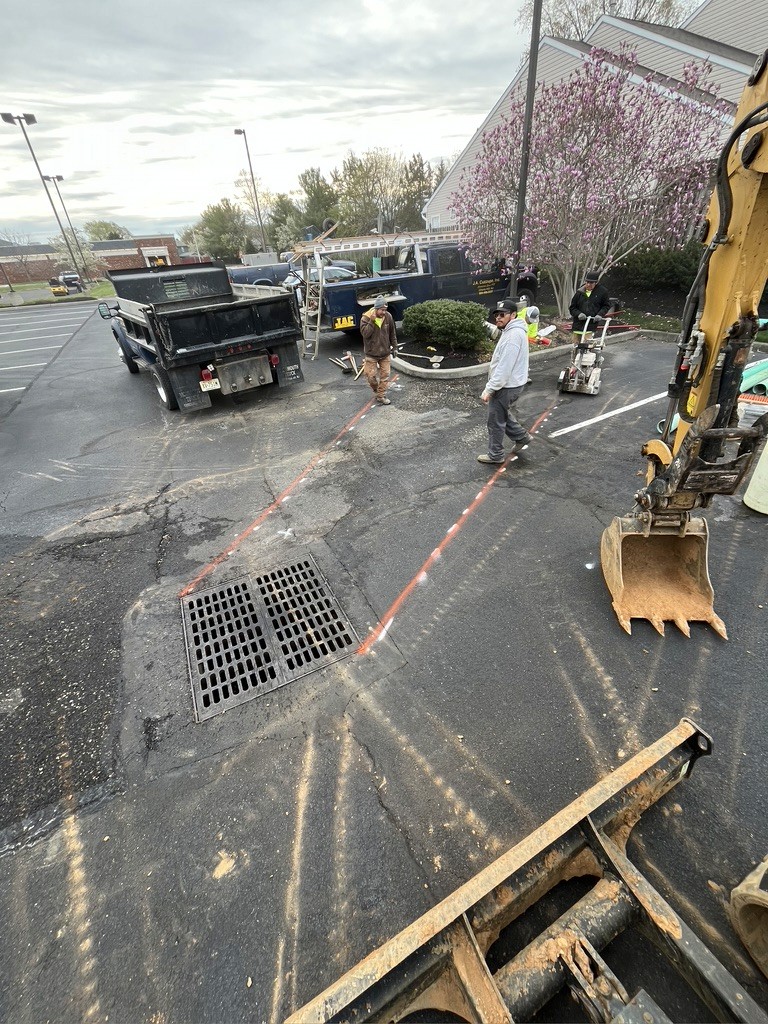
Maple Commons Drainage Repair
Complete drainage system repair and installation for the Maple Commons residential complex. Extensive stormwater work integrated with existing utilities.
Cherry Hill questions, answered.
Not after a full removal done properly. The reason a filled pool settles is uncompacted fill — material dumped in one lift never reaches density. We place clean structural fill in lifts and compact each one, so the area behaves like the rest of the lot. If you want to put an addition, a garage or a slab over it later, tell us before we start and we will document the backfill.
Most residential removals run a few working days on site — drain and disconnect, demolition and haul-off, then backfill and grade. Weather and disposal scheduling are the usual variables. We do not open the yard until the permit is in hand and the trucking is lined up, so the disruption is continuous rather than spread over weeks.
Usually yes, with the right size machine. Those neighborhoods have narrow side yards and mature trees, so we size the excavator to the gap rather than forcing the largest machine through. Where access is genuinely blocked, we discuss removing a fence section — and restoring it — before the job is priced, not after we arrive.
You don't have to, but think about the finished yard. Leaving a ring of decking around a filled-in pool tends to look exactly like what it is, and the slab edge becomes a trip hazard as the fill settles at the margins. Removing the deck with the pool is cheaper than coming back for it later because the trucking is already mobilized.
Other services in Cherry Hill.
Inground Pool Removal — Cherry Hill, NJ